
The Measure of My Captain
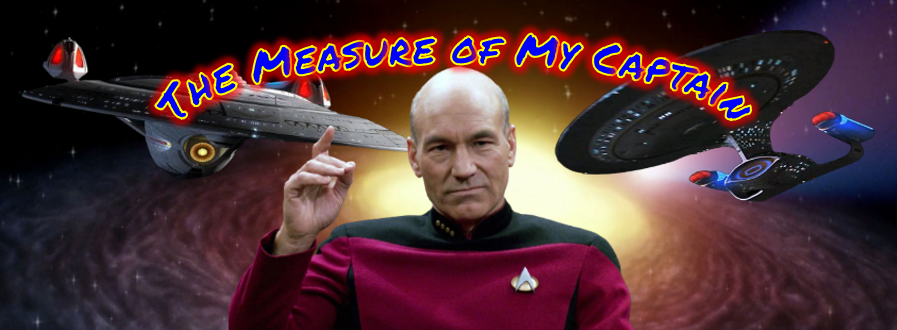
Sir Patrick Stewart passed away on 30 October 2026 at the age of 86. The impact he had on the industry he devoted his life to is immeasurable, to say nothing of the charity and humanitarian work that helped countless people. To many he was a Shakespearean actor. To others, Professor Charles Xavier. To others still, Deputy Director Bullock. For me, he was Captain Jean-Luc Picard. My Captain.
This won’t be an obituary nor will it attempt to chronicle a life well lived. Others are better placed to do that. Instead, I want to reflect on what Patrick Stewart meant to me through the role that had the greatest impact on my life. Captain Jean-Luc Picard of the USS Enterprise NCC-1701-D.

Captan Jean-Luc Picard of the Federation Starship Enterprise
Star Trek has been a constant presence in my life for longer than I can remember and while I love every incarnation of it in different ways, The Next Generation has always felt most like home. Picard is a big part of why. I admired his intelligence, but more than that I admired his judgement. I admired his authority, but also his willingness to listen. He could command a room with a few carefully chosen words, defend his principles with absolute conviction and still learn from the people around him when they showed him he was wrong.
Picard wasn’t perfect and that’s a large part of why he resonated with me. He was intelligent, principled and compassionate but he was also stubborn, emotionally distant and capable of making serious mistakes. He was introduced as a flawed figure, unable to deal with children and uncomfortable outside the structure of command. Right from the beginning, he was portrayed as a man with personal limitations he needed to confront. What made him interesting wasn’t the flaws themselves, but his willingness to acknowledge them and grow beyond them. Time and again, Picard was challenged by those around him, most significantly by Data.
Data’s goal was to learn about humanity, and Picard took it upon himself to mentor him through that exploration. Many episodes depicted Picard giving Data advice about what it means to be human and trying to put into words things that came naturally to most people. In “Peak Performance”, he tells Data: “It is possible to commit no mistakes and still lose. That is not a weakness. That is life.” It’s a profound statement that speaks to resilience as well as Picard’s understanding of the human condition. Data, as a machine, believes that a lack of mistakes should guarantee success. Picard understands that life is rarely that straightforward and that failure can come through circumstances beyond anyone’s control. It’s a lesson Data needs to learn and Picard finds the perfect words to teach it. “That is life” in particular recognises that being human means accepting that some things simply can’t be controlled. In “The Defector” he takes a different approach, encouraging Data to observe how people react when they find themselves on the edge of a pivotal historic moment and draw his own conclusions.

The trial begins
Picard wasn’t only challenged in his understanding of humanity by Data, there were also preconceptions he had to become aware of and confront. In “The Offspring” he expresses disappointment that he wasn’t consulted before Data decided to create Lal. Data responds by pointing out that nobody else on the crew consults him when deciding to have children. It’s a powerful challenge that forces Picard to consider how he relates to Data. As much as he had always been a champion for Data’s personhood, this exchange shows that on some level he still regards him as a machine, which is why he is so shocked when Data chooses to reproduce.
It’s a lesson well learned, as evidenced by his behaviour throughout the remainder of the episode. He stands up to Admiral Haftel, who wants to take ownership of Lal so she can be studied in a Starfleet facility instead of remaining on the Enterprise to be raised by her father. Picard expresses his stance eloquently: “There are times, sir, when men of good conscience cannot blindly follow orders. You acknowledge their sentience, but you ignore their personal liberties and freedom. Order a man to hand his child over to the state? Not while I’m his captain.” This shows that he has learned from his earlier misjudgement while also highlighting that Picard is the sort of leader who will stand by his crew and won’t defer to his own superiors when he believes them to be wrong.
Picard as an advocate for Data’s sentience is best chronicled in “The Measure of a Man”, where he’s tasked with arguing that Data is as sentient as any other serving officer. The episode is deeply thought-provoking, forcing consideration of what sentience actually is and whether anyone can ever be truly certain that they possess it. Everyone except Data has their sentience accepted without question, so the hearing seeks to determine whether Data can be considered a person or merely property. Ultimately, the ruling falls in his favour, but the verdict is less interesting than Picard’s intellectual journey in reaching it.

Let’s settle this
Data challenges Picard’s assumptions by using the example of Geordi’s VISOR, which is superior to biological vision, yet nobody suggests replacing everyone’s eyes with one. The comparison illustrates Data’s right to choose not to submit to experimentation that could cost him his life.
He values Data as an officer and as a friend but still possesses an unconscious blind spot regarding the full extent of Data’s personhood. He even admits that Commander Riker’s devastating testimony almost convinced him that Data lacked sentience, revealing that he has doubts of his own to wrestle with.
Guinan is the one who frames the argument in a way Picard immediately understands. She points out that societies have always relied upon “disposable creatures” to perform the dirty, dangerous and demanding work that others consider beneath them. If Data can be replicated, she argues, Starfleet could create an entire race of disposable people.

Why wasn’t I consulted?
Picard puts it more definitively by calling it slavery. Once he recognises the implications, he has no difficulty constructing his argument. He contends that Data is as sentient as anyone else in the room and dismantles the opposing case piece by piece. Humans themselves are machines of a different type. Other species possess physical capabilities far beyond those of humanity. Data demonstrates curiosity, individuality and the capacity to form meaningful relationships, qualities Picard believes exist beyond simple programming. Most importantly, he argues that if humanity is responsible for creating a race of androids then it will ultimately be judged by how it chooses to treat them.
“The Measure of a Man” is such a rich and textured episode that entire essays have been written about it, but it remains one of the clearest examples of Picard at his best. It showcases him as a leader, an advocate and, perhaps most importantly, a flawed man willing to challenge his own assumptions.
Picard’s blind spot around Data’s personhood takes a long time to disappear. Another example of him unconsciously seeing Data differently can be found in “Redemption II” when he is issuing command assignments due to a shortage of senior officers available to take command of starships and Data is initially overlooked. Data points out that his twenty-six years of service would surely qualify him for such an assignment and directly questions whether Picard believes the time has arrived for an Android to command a starship. Rather than fully engage with the implications of that question, Picard simply assigns Data a ship, perhaps leaving himself to reflect on those assumptions at a more opportune time.

Opening up is dirty business
The Picard/Data dynamic emerged as a core pillar of The Next Generation, which likely explains why it received so much attention in the films. Picard continues mentoring Data in Generations after the emotion chip is installed, refusing to relieve him of duty because he believes it’s more important that Data learn how to integrate feelings into his life. It’s a tough-love approach that prevents him from retreating every time he becomes scared, upset or distracted. The advice resonates beyond Data’s situation. Picard is dealing with profound loss of his own and has chosen to continue performing his duties rather than take time to grieve. His advice about integrating feelings into life is as much something he needs to hear himself as it is a lesson for Data.
In First Contact, Picard chooses to remain on the Enterprise after activating the self-destruct sequence because he wants to save Data from the Borg. He points out that when he was assimilated his crew risked everything to save him and, since Data is now in a similar situation, he owes him the same. The man who once struggled to fully recognise Data’s personhood is now willing to give his life for him. It is a definitive example of friendship and demonstrates how completely Picard has come to regard Data as an equal.
Nemesis offers a role reversal in their dynamic. Picard opens up to Data about his discomfort with what he believes Shinzon represents and Data is the one who reassures him, relating it to his own relationship with B-4. It represents the culmination of their relationship. Data has grown so much through Picard’s guidance that he now understands enough about humanity to help Picard understand himself.

Being challenged
What began as a mentor guiding an Android through the complexities of humanity ultimately became one of Star Trek’s richest friendships. By the end, Data no longer needed Picard to explain what it meant to be human. He understood enough to offer Picard guidance in return.
Another significant relationship in Picard’s life is with the omnipotent entity Q. Introduced in “Encounter at Farpoint”, Q places humanity on trial to determine whether it has matured enough to be entrusted with its place in the galactic community. This immediately puts Picard in the difficult position of representing his entire species and defending its worth. As “All Good Things” later reveals, the trial never truly ended. Every encounter with Q became another examination of Picard, humanity and their capacity for growth.
Q is similar to Data in that he constantly challenges Picard’s assumptions, but where Data helps Picard better understand others, Q forces him to better understand himself. Throughout the series, Q repeatedly strips away Picard’s certainty and compels him to confront uncomfortable truths.
One of the clearest examples comes in “Q Who”. Picard arrogantly declares that the Enterprise is prepared for anything it might encounter, prompting Q to test that confidence by placing the ship directly in the path of a Borg Cube. The encounter leaves Picard facing an adversary that completely outclasses his crew and defies his understanding of the universe. With no viable options remaining, he is forced to admit his mistake and ask Q for help. Declaring “I need you!” in front of his bridge crew is a moment of profound humility for a man who prides himself on competence and self-reliance.

It’s not easy being on the receiving end of a Picard speech
Q later remarks that a lesser man would rather have died than ask for help. By the end of the episode Picard recognises the lesson for himself, admitting to Guinan that perhaps they needed “a kick in our complacency”. It’s a costly lesson. Eighteen crew members lose their lives and the Federation unwittingly announces its existence to an enemy it’s utterly unprepared for. More importantly, Picard learns that the universe contains dangers beyond his comprehension and that confidence can easily become arrogance if left unchecked.
Another significant example of Picard and Q’s dynamic can be found in “Tapestry”, where Picard faces death and Q gives him the opportunity to revisit what he perceives as one of the greatest mistakes of his life. The incident in question is a fight with Nausicaans that resulted in him being stabbed through the heart as a young officer.
Picard uses the opportunity to avoid the confrontation entirely, only to discover a future where he never becomes captain, never distinguishes himself and never fulfils his potential. The lesson is that the reckless mistake he spent years regretting was also the event that taught him to take risks, seize opportunities and refuse to fade into the background. What he viewed as a failure was actually foundational to the person he became.

Confronting pain
Q forces Picard to recognise that mistakes are not obstacles to growth but an essential part of it. Without them, he can’t become the man he wants to be. Few characters understood Picard as thoroughly as Q did and few were as effective at exposing the assumptions he carried about himself.
The lesson learned in “Tapestry” arguably informs Picard’s outlook in “The Chase”. Faced with evidence of the path not taken, he acknowledges the pull archaeology will always have on him but ultimately expresses no regrets about choosing Starfleet. He believes in the life he built for himself and the choices that shaped it, even the mistakes. They made him the man he became.
Picard’s experience of being assimilated by the Borg defined him as much as any of his strengths. It affected him so deeply that his PTSD continued to surface whenever the franchise allowed it to. In “Family” he confronts that trauma when he returns home to visit his brother, sister-in-law and nephew. His brother is less than gentle with him and the two eventually end up fighting in the mud, forcing Picard to finally break down and admit how helpless he felt when the Borg took his very self from him and forced him to commit unspeakable acts. It remains one of Patrick Stewart’s finest performances in the role. Picard’s relationship with his crew was such that he could rarely allow himself this level of vulnerability, so it had to be someone like Robert, someone capable of getting under his skin and unconstrained by the authority Picard carried everywhere else.

Making it all very clear
Vulnerability with his crew is something he does eventually become comfortable with, however limited. In Generations he cries in front of Troi as he processes the deaths of his brother and nephew and, during his wedding toast in Nemesis, openly declares that he considers Riker and Troi family. Even joining the poker game in “All Good Things” is an act of vulnerability. For seven years he maintained a professional distance from his senior staff, but in that moment he allows himself to simply be their friend. Looking around the table, he quietly remarks: “I should have done this a long time ago.”
Picard’s PTSD also manifests in a significant way in “I, Borg”, where he is so consumed by his hatred of the Borg that he is willing to use Hugh as a Trojan Horse that could ultimately lead to their destruction. He becomes so fixated on seeing Hugh as nothing more than a drone that he initially refuses to be in the same room with him. Once he finally interacts with Hugh, however, his better nature begins to reassert itself. He stops seeing a Borg drone and starts seeing an individual who, like him, is a victim of the Collective. Faced with that reality, he abandons his plan and is later reprimanded for doing so. It’s a decision he questions but never regrets.
First Contact provides the clearest example of Picard’s trauma overwhelming him. The Borg boarding the Enterprise and assimilating his crew one by one pushes him to the brink and reduces him to a man consumed by hatred. He becomes Captain Ahab hunting the white whale, unable to see beyond his need to make the Borg suffer for what they took from him. There’s a particularly powerful scene where he declares that he’s drawing a line and vows that the Borg will pay for what they’ve done. In that moment it becomes clear that his decisions are no longer about protecting the crew but satisfying a deeply personal need for retribution.

Letting it out
Only when Lily points this out does he recognise what he has become. Realising that his obsession threatens to cost even more lives, he finally abandons it and chooses what’s best for the crew. As with so many defining moments in his life, Picard ultimately becomes stronger not because he is immune to his flaws, but because he’s willing to confront them.
In terms of his admirable qualities, Picard’s leadership skills make him the sort of boss anyone would want. He’s consistently portrayed as a firm but fair commander who expects excellence from his crew and rewards it with absolute trust. When people fall short of those standards, he’s never afraid to hold them accountable.
A good example of this can be found in “The First Duty”, when he learns that Wesley Crusher is involved in a cover-up surrounding the death of a fellow cadet. Rather than immediately expose him, Picard gives Wesley the opportunity to come forward on his own. This results in the famous “The first duty of every Starfleet Officer is to the truth…” speech, delivered with the conviction of a man who genuinely lives by the principles he’s espousing. When Wesley eventually comes forward, Picard simply remarks that he made sure Wesley listened to himself. Beneath the stern lecture is quiet satisfaction that his faith in the young cadet wasn’t misplaced.

Stop whining and get back to work
Another example can be found in “The Pegasus”. Picard knows that Riker is withholding information from him and understands why. Rather than demand an explanation, he allows Riker the space to reach the correct decision himself while making it clear that failing to do so will have consequences. It’s a subtle demonstration of trust and accountability existing side by side.
Picard isn’t someone who blindly follows orders and he expects the same from those who serve under him. He appointed Riker as his first officer in part because Riker once refused to let his captain place himself in unnecessary danger. Protecting the crew and doing the right thing matter more to Picard than simple obedience and he makes it clear throughout his command that he expects his officers to exercise judgement rather than merely comply.
“Lower Decks” provides another excellent example. Picard tells Ensign Sito Jaxa that he specifically requested her assignment because he wanted her to have an opportunity to prove herself rather than allow a past mistake to define the rest of her career. It reflects his belief that people are more than the worst thing they’ve done and that genuine growth deserves recognition.
The same philosophy can be seen in his relationship with Riker. Throughout the series, he consistently encourages his first officer to pursue his own command, despite knowing that doing so would mean losing him. His support isn’t about what he wants from those under his command. It’s about helping them become the people they want to be.

Engage!
That’s what makes Picard such an effective leader. He demands a great deal from his crew because he genuinely believes they’re capable of greatness. In return, they know that if they give him their best, he’ll support them without hesitation. Few people could ask for a better captain than that.
Through Picard, Patrick Stewart taught generations of viewers that intelligence and compassion are strengths, that mistakes don’t define us and that growth is always possible if we’re willing to examine ourselves honestly. The examples I’ve discussed here are only a fraction of what made the character resonate with me, but they illustrate why he remains one of the most important fictional figures in my life.
His words in Generations feel particularly fitting:
“Time is a companion who goes with us on the journey and reminds us to cherish every moment because they’ll never come again. What we leave behind is not as important as how we’ve lived.”
Rest in peace, Mon Capitaine.

A long time coming
We’d love to know your thoughts on this and anything else you want to discuss. You can find us on Facebook, Twitter, BlueSky and Discord or just leave a comment in the comment section below. You’ll need an account for Disqus but it’s easy to set up.


