
Heart of the Beast
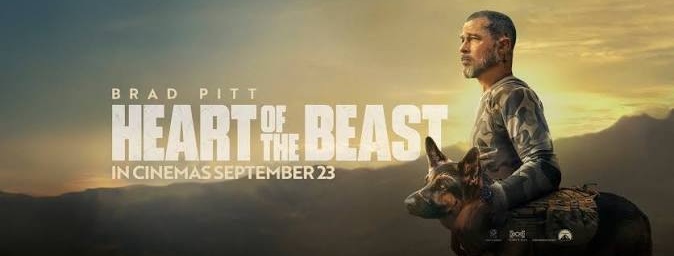
After a plane crash, a retired Special Forces officer and his combat dog struggle to survive the Alaskan wilderness in David Ayer’s Heart of the Beast.
“Never work with children or animals” is a maxim often attributed to 1940s actor and comedian W.C. Fields. The idea is straightforward and comes from the fact that they’re unpredictable enough to derail a shoot. David Ayer ignores that advice by building a film around a canine co‑lead who has to carry several complex scenes. It’s a bold choice to centre an entire film on one human actor and a dog, especially when it limits how much of the story can be advanced through dialogue. Self‑imposed constraints can be a strength, and filmmakers pushing against them is often how great art emerges.
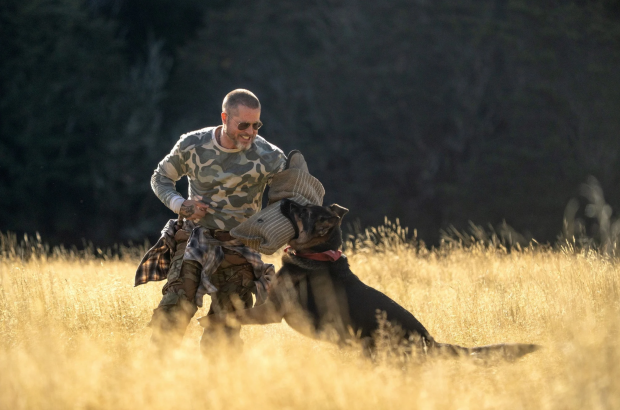
We work hard we play hard
Heart of the Beast isn’t great art but it is a confidently made piece of cinema. Its simple setup works in its favour because the situation and the stakes are established with very little effort. Much of the story is told visually and the film centres itself on the bond between James (Brad Pitt) and his canine companion Odin (Uber). That relationship is handled with a steady, assured touch. Details like Odin’s missing leg and the scars James carries from his military career deepen the sense that both characters are carrying long histories of pain. They find comfort in each other and move through the world with a shared rhythm built on trust and love. Cameron Alexander’s script avoids unnecessary character information and focuses on what matters for this story. The bond between James and Odin is the heart of the film and the script gives just enough insight into how that bond was forged.
Their bond is one of brotherhood like many soldiers forge, the key difference being that one of them isn’t human but that never matters to James. Odin is all he needs in his life. The film opens with James flying to the Alaskan wilderness to spend time camping with Odin, and the implication is that neither of them has much interest in people. They prefer solitude and isolation with only each other for company. This becomes more explicit when they encounter a wanderer played by J.K. Simmons who provides an opportunity for some awkward and unnecessary exposition. It’s brief and Brad Pitt and J.K. Simmons have an engaging dynamic while it lasts. Simmons plays a chatty and inquisitive man who is skilled at getting James to open up through warmth and sincerity. He’s framed as someone who’s also been pushed to his limits, has seen the worst of people and has managed to find some inner peace. This creates a neat thematic link to James and Odin’s story. The character doesn’t overstay his welcome and disappears, leaving the remainder of the film to focus on the duo.
As a survival movie, Heart of the Beast is impressively understated. Most of the challenges are environmental, though there’s a wolf attack that feels unnecessary, especially in a film so focused on a dog being rehabilitated from a forced violent existence. The idea of presenting vicious dogs as enemies doesn’t sit comfortably with what the film’s trying to say. It’s a brief sequence but it still stands out as something the film doesn’t need and pulls it into territory that doesn’t fit. The encounter with a bear is much more in keeping with what the film’s saying and it’s an impressively tense moment that depends on how connected James and Odin are, with the tension coming from whether Odin trusts James enough to override his baser instincts. It’s a revealing moment for both characters and says a great deal about their relationship without a single word of exposition.
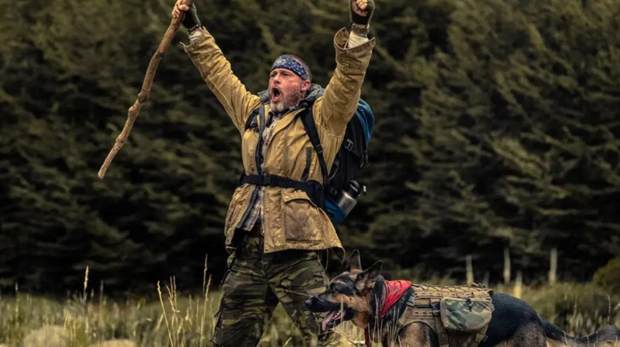
I win at fetch
The environmental hazards are well executed and feel genuinely dangerous, with moments like a treacherous log crossing showing how harsh the landscape can be. The Alaskan wilderness is a stunning location that’s breathtaking to look at while also being unforgiving and full of hidden dangers. It becomes a crucible for James and Odin as they cover roughly sixty miles to reach civilisation and get the help they need.
James is shown as a man who’s had a lot taken from him through his combat experience, just as Odin has. Brad Pitt perfectly portrays someone who’s barely held together but keeps going through sheer determination not to let his life be defined by all the horrible things he’s seen. The plane crash caused by his heart attack highlights the toll his life has taken on his body. It’s a war of attrition with each hazard taking another piece of him and the tension coming from whether he’ll reach his destination before the wilderness takes everything he has left. At the same time he pours so much of his energy into keeping Odin alive, and that’s more important to him than his own survival.
Odin’s experience is given the same weight and the film treats him as a character rather than a prop. Uber’s work in the role is impressive, with a presence that never feels manufactured. The film asks a lot of him and he delivers, frequently carrying scenes that depend entirely on physical behaviour and suggestion. He conveys a great deal through stillness and through the way he watches James, with those looks doing the work that dialogue normally would. His responses to James, to the landscape and to the memories that unsettle him are precise and grounded, and that authenticity strengthens the film’s emotional core.
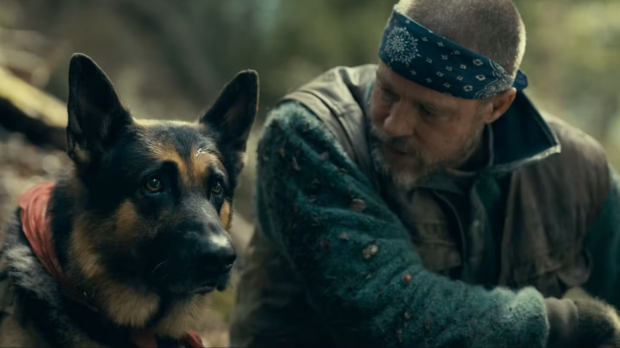
Who’s your agent?
As they make their journey, the film shows that not all of the scars are physical. Both are haunted by their experience of combat, and a particularly effective sequence has Odin suffering a PTSD flashback in his sleep and waking in a panic, only to be calmed by James petting him and speaking softly. There are quieter moments where Odin provides the same care for James, grounding him when memories threaten to overwhelm him.
David Ayer is far from a subtle director so there are points where it’s stated outright that both have seen horrors no living being should be expected to endure, but the film gets away with it because the sincerity of those declarations feels earned. It’s open about what it means to return from war and what it takes from those who experience it. James doesn’t regret his service but it changed him in fundamental ways he’s still reckoning with, and the same applies to Odin.
The film avoids the trap of condemning the military for putting people and dogs through that, and nothing is said about the combat scenarios being unjust. It’s more interested in the physical and psychological impact, the kind that would manifest regardless of the ethics of what they were ordered to do. Instead it invites the audience to consider whether the military deserve condemnation for allowing the situations that changed James and Odin in the ways they were, a question that lingers in the long stretches of traversing scenic vistas. A great balance is struck between giving space for contemplation and maintaining a brisk pace that never lets the experience lag.
Heart of the Beast is a thoughtful and confidently made piece of cinema. It’s visually breathtaking, well-paced, performed with conviction and thoughtful in how it explores its ideas. It’s also deeply moving in places, with an ending that will challenge even the firmest attempt at staying dry-eyed. For those worried about canine jeopardy there are moments that might raise concern, but most of the harm is taken by Pitt. A content warning might be needed for anyone who doesn’t enjoy seeing him put through the wringer.
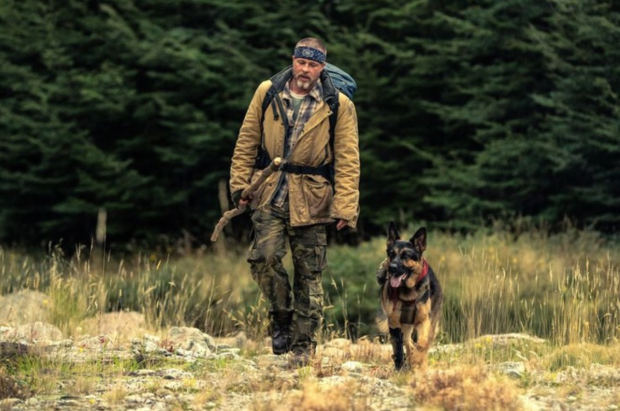
Walkies wait for no man!
Verdict
A thoughtful and confident movie that lets its core man and dog relationship carry the emotional weight with a sincerity that never feels forced.
Overall
-
"Heart of the Beast"
Summary
Kneel Before…
- the brilliantly portrayed central relationship
- breathtaking visuals
- strong pacing
- excellent performances
- visual storytelling that doesn’t rely on dialogue
- thoughtful and well explored ideas
Rise Against…
- the wolf sequence being at odds with what the film is saying
- some clumsy and unnecessary exposition
What did you think? Select your rating in the “User Review” box below
User Review
( votes)We’d love to know your thoughts on this and anything else you want to discuss. You can find us on Facebook, Twitter, BlueSky and Discord or just leave a comment in the comment section below. You’ll need an account for Disqus but it’s easy to set up. Don’t forget to share your rating in the “User Review” box.


