
Resident Evil (2026)
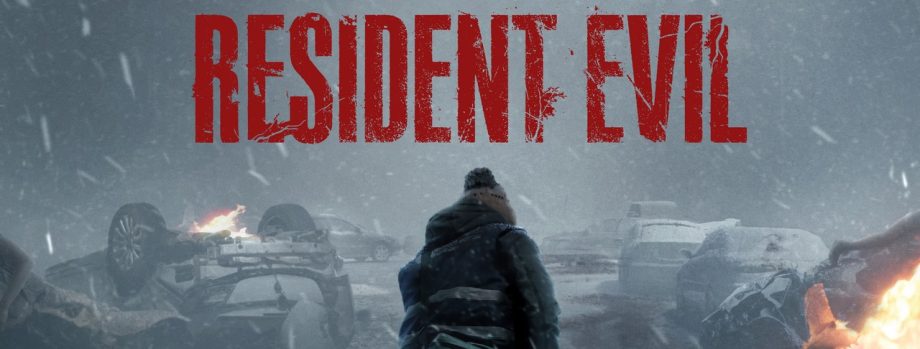
A medical courier is dragged into a sudden outbreak and forced to fight through mutated horrors to survive in Zach Cregger’s Resident Evil.
Video game adaptations have a reputation for weak storytelling and clumsy translation from an interactive medium to a passive one. Resident Evil’s own cinematic history hasn’t helped, with the Mila Jovovich series criticised for drifting too far from the games and the reboot dismissed for its quality. There have been successes, such as the Sonic The Hedgehog films and The Super Mario Bros. Movie, but the sense remains that adapting a game is a challenge few films manage to solve.
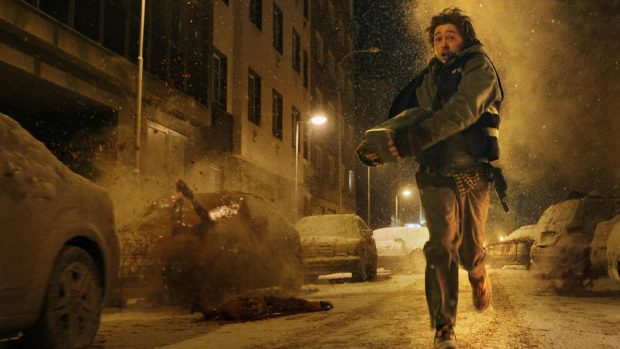
Just keep running
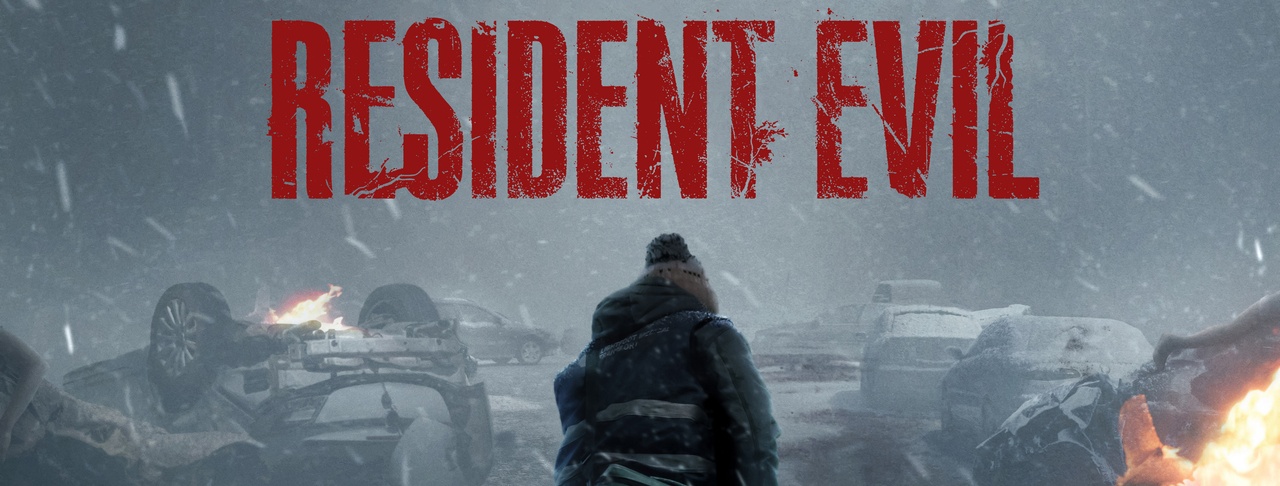
Zach Cregger’s Resident Evil builds itself around clear nods to the series’ game mechanics and visual language. Over‑the‑shoulder framing echoes the third‑person camera of the recent titles, remaining ammunition is checked, and many locations function like puzzle boxes with tasks that must be completed before moving on. Cregger understands the appeal of survival horror and shapes the film to feel like watching someone play a Resident Evil game, while still keeping the experience accessible for viewers unfamiliar with the mechanics. The film also draws from other influences, with creature designs that recall John Carpenter’s The Thing and a snowy, isolated setting that brings other survival horror giant Silent Hill to mind.
Rather than adapting a specific game, Cregger creates an original story in the spirit of the source material. Bryan (Austin Abrams), a medical courier, is pulled into a viral outbreak in Raccoon City after taking a double‑pay job. His night unravels when he hits a woman on a snowy road and discovers she is no longer human. From there he faces a constant fight for survival against Lovecraftian creatures and smaller, more mundane threats like endless padlocks that block his progress and keep him from safety.
Bryan works well as a horror protagonist. He’s resourceful enough to improvise solutions in the moment, yet clearly unprepared for what he’s facing. He learns to handle weapons but never with reliable aim, reacts with convincing fear to the creatures he encounters, and his panicked muttering offers a natural window into his state of mind when he has no one to interact with. The film also sketches in elements of his life outside this nightmare, giving him people to care about and a conversation left unresolved, which adds a quiet dread to the possibility that he may never get the chance to fix it.
The film commits fully to a single viewpoint, staying locked to Bryan as he fights to survive and pushes toward his goal of delivering the package he carries. Viewers learn everything as he does and become uncomfortably attached to him as each new threat appears. That single viewpoint makes the experience more visceral, binding the audience to his fear and exhaustion. They hear every breath, every cry, every setback, and feel the relief of each small victory. Resident Evil becomes a relentless ride, with the viewer strapped to Bryan and unable to step away. The storytelling reinforces this focus, avoiding expansive lore and committing instead to a personal survival narrative that keeps the experience tight and immediate. Momentum never drops enough to justify another perspective, dragging an unprepared man through one punishing situation after another.
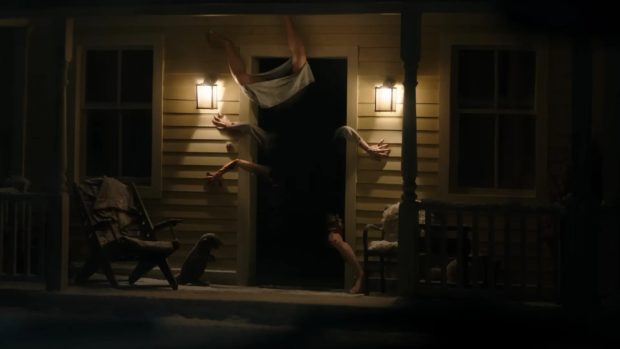
Let’s get far away from that
Set pieces throughout the film are varied and inventive. Many locations are designed around clear game‑like objectives, giving Bryan a defined goal each time he enters a new space. An early sequence in a barn and farmhouse shows how effectively the film uses confined areas to build tension, injecting bursts of terror at just the right moment to raise the urgency. The snowy surroundings add their own pressure, reducing the world to a small pocket of visibility surrounded by an endless white void that feels both isolating and unsafe. Lighting is used with similar precision, often reducing Bryan’s world to the narrow beam of his phone torch while the rest of the space sits in suffocating darkness. The film balances slow building suspense with frantic chases, keeping each encounter distinct and preventing the aesthetic from becoming stale as Bryan moves through different environments. Creature designs are uneven, with some genuinely unsettling creations and others that land with less impact.
Resident Evil keeps its thematic ambitions small, but it does play with the idea of being punished for doing the right thing. Bryan’s ordeal begins when he hits a woman on a snowy road and chooses to help her rather than drive on, a decision that immediately pulls him into the nightmare. Other moments show him putting himself in danger when selfishness would be easier, and each time the choice backfires. The film gestures toward a broader notion that goodness isn’t rewarded, but it can’t develop the idea further without a contrasting moment where selfishness pays off.
Not everything works. There are moments where the comedy distracts, even though it usually works as situational tension‑breaking. A weaker third act also drags the experience down; it feels rushed and slightly awkward, in a way that’s oddly consistent with several Resident Evil games. The final stretch has a clear intention, but it never lands with the force it needs.
The film’s strength lies in its commitment to survival horror fundamentals. Strong craft, a focused perspective, and a grounded lead performance give it a coherence that outweighs its weaker moments. It’s a confident adaptation that respects the source without being bound by it.
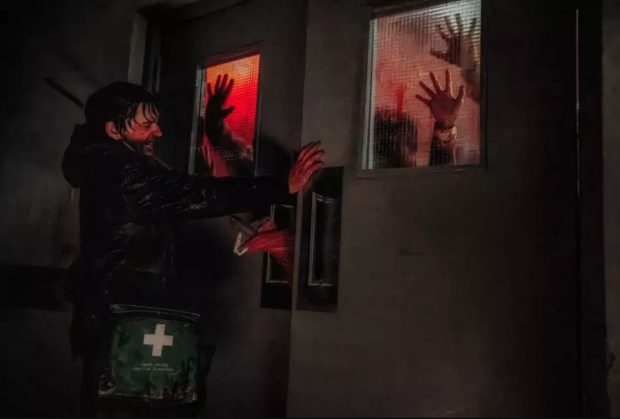
Will this night ever end?
Verdict
A confident, focused adaptation that turns survival horror fundamentals into clear, effective filmmaking.
Overall
-
"Resident Evil (2026)
Summary
Kneel Before…
- successfully shifting game mechanics into clear cinematic languaga
- a propulsive narrative
- Bryan being a strong horror movie protagonist
- using his perspective to intensify the isolation
- excellent atmosphere
- impressive tension
- varied and inventive set pieces
Rise Against…
- a comparatively weak third act
- distracting comedy
What did you think? Select your rating in the “User Review” box below
User Review
( vote)We’d love to know your thoughts on this and anything else you want to discuss. You can find us on Facebook, Twitter, BlueSky and Discord or just leave a comment in the comment section below. You’ll need an account for Disqus but it’s easy to set up. Don’t forget to share your rating in the “User Review” box.


[…] Craig’s review of Resident Evil (2026) […]